Mon-Thurs EST: 7:00 AM - 5:00 PM

Mon-Thurs EST: 7:00 AM - 5:00 PM
Threads are not one size fits all. Different thread types exist to handle different loads, tolerances, motion requirements, and sealing needs. Metric and Unified threads are most common for fastening, while ACME, buttress, and square threads are used for motion and load transfer. Choosing the right thread type affects strength, fit, manufacturability, and long term performance. Understanding these differences helps ensure precision parts assemble correctly and perform as designed.
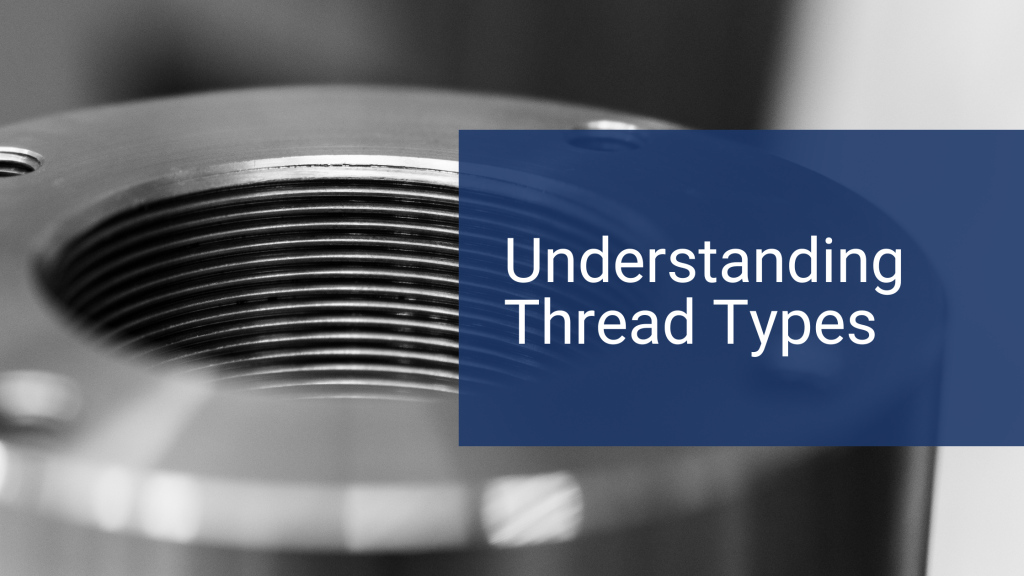
Threads are helical features cut or formed into a part to allow components to fasten together, transmit motion, or create sealed connections. In precision machining, thread selection is critical because it directly impacts part accuracy, repeatability, and reliability.
Small deviations in thread geometry can lead to poor fit, premature wear, vibration loosening, or assembly failure. That is why machinists and engineers must understand both thread form and thread standard when designing or manufacturing precision components.
Thread standards define the geometry, dimensions, and tolerances that ensure compatibility between mating parts. Using standardized threads allows components manufactured in different facilities to assemble correctly.
The two primary measurement systems used in machining are metric and imperial. Metric threads specify diameter and pitch in millimeters. Imperial threads specify diameter in inches and threads per inch. While these systems may look similar, they are not interchangeable and must be clearly defined on drawings and specifications.
Metric Threads
Metric threads follow international ISO standards and are widely used across global industries. They feature a 60 degree thread angle and are identified by an “M” designation followed by diameter and pitch.
Metric threads are available in coarse and fine pitches. Coarse metric threads are more tolerant of debris and easier to assemble. Fine metric threads offer better adjustment accuracy and higher clamping force, making them suitable for precision applications.
Unified National Threads
Unified threads are commonly used in North America and also feature a 60 degree thread angle. They are categorized by pitch series.
UNC threads are coarse and designed for general purpose fastening. UNF threads are finer and used when higher tensile strength or vibration resistance is required. UNEF threads are extra fine and typically reserved for specialized or high precision applications.
ACME Threads
ACME threads have a trapezoidal profile with a flat crest and root. They are designed for power transmission rather than fastening.
These threads are commonly used in lead screws, linear actuators, and CNC machinery where smooth motion and load distribution are important. Compared to square threads, ACME threads are easier to machine while still offering good efficiency.
Buttress Threads
Buttress threads are designed to handle high loads in one primary direction. One side of the thread is nearly perpendicular to the axis, allowing it to support heavy axial loads efficiently.
They are often used in presses, jacks, and heavy equipment where force is applied in a single direction and back loading is minimal.
Square Threads
Square threads are highly efficient for converting rotational motion into linear motion. Their shape minimizes friction but makes them more difficult and costly to machine.
Because of this, square threads are typically reserved for applications where efficiency outweighs manufacturing complexity.
Pipe Threads
Pipe threads are designed to create pressure tight seals rather than precise mechanical alignment. Many pipe threads are tapered so that the connection tightens as it is assembled.
These threads are commonly used in hydraulic, pneumatic, and fluid handling systems where leak prevention is critical.
Choosing between coarse and fine threads depends on the application. Coarse threads are more durable in harsh environments and allow for faster assembly. Fine threads provide greater adjustment accuracy and improved resistance to vibration but require tighter manufacturing control.
In precision machining, fine threads are often selected when alignment, repeatability, or load distribution is critical.
Thread fit defines how tightly internal and external threads engage. Tighter fits provide better alignment and load sharing but require higher machining accuracy. Looser fits are easier to assemble and more forgiving but may sacrifice precision.
Selecting the correct tolerance class is essential for ensuring consistent performance, especially in assemblies that are repeatedly installed and removed.
Threads in precision machining are produced using several methods depending on part geometry, material, and tolerance requirements.
Thread cutting uses taps, dies, or CNC tools to remove material. Thread milling offers flexibility and precision, especially for large or custom threads. Thread rolling forms threads by deforming material, increasing strength and improving surface finish. Thread grinding is used for extremely tight tolerances and high accuracy applications.
Each method has tradeoffs related to cost, strength, and precision.
Selecting the correct thread type involves evaluating load conditions, material properties, assembly environment, and tolerance requirements. Clear thread specifications on engineering drawings help prevent costly errors and ensure parts function as intended.
In precision machining, thoughtful thread selection is just as important as material choice or dimensional accuracy.
Threads may appear simple, but they play a major role in the performance and reliability of precision machined components. Understanding the different thread types, standards, and manufacturing methods allows engineers and machinists to make informed decisions that improve fit, function, and longevity.
At Capitol Tool, our state-of-the-art CNC machines and expert technicians ensure unparalleled precision for every project. Whether you need a single prototype or a high-volume production run, we’ll help you select the best techniques and materials to meet your exact requirements.